AI SEO for Ecommerce for online retailers
AI SEO for Ecommerce helps online retailers support AI product research with structured pages. The goal is to make category and product proof easy to cite by combining crawlable pages, answer-first content, structured data, internal links, and repeated prompt monitoring. This guide turns AI SEO for ecommerce into a practical article plan for online retailers.
AI SEO for Ecommerce helps online retailers support AI product research with structured pages. The goal is to make category and product proof easy to cite by combining crawlable pages, answer-first content, structured data, internal links, and repeated prompt monitoring.
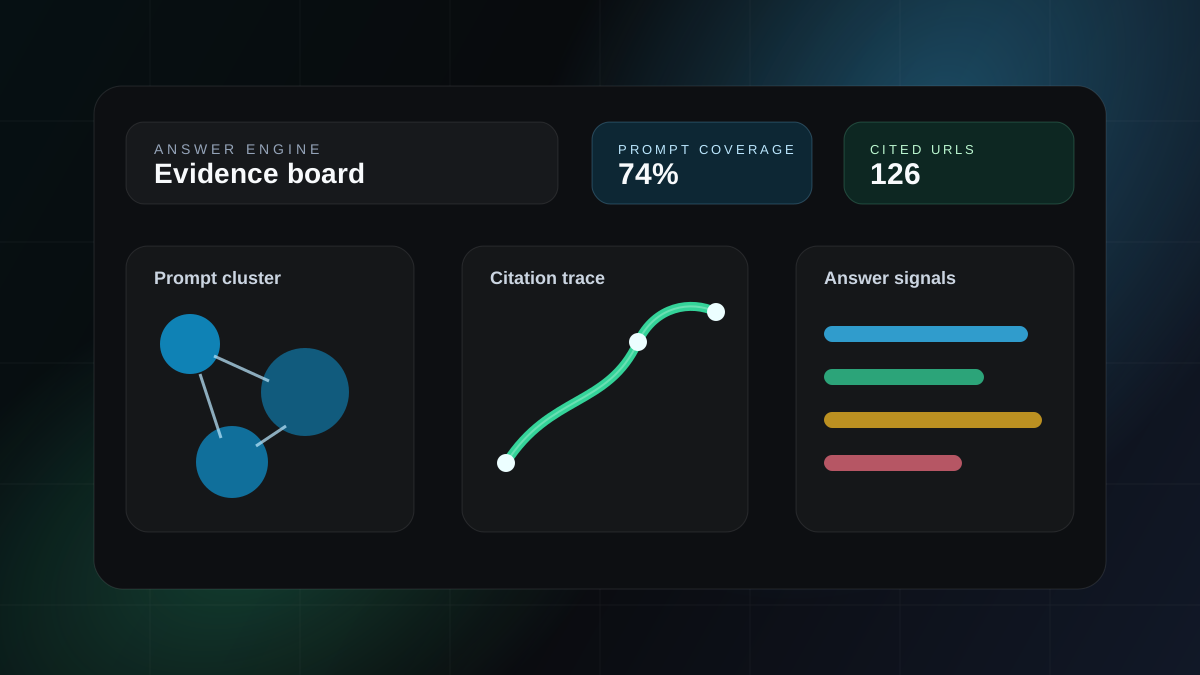
AI SEO for Ecommerce matters because buyers are no longer only scanning ten blue links. They ask AI systems for a shortlist, a definition, a comparison, or a recommendation, and the answer may decide which brands get considered. For online retailers, the useful question is not "can we publish a page for this keyword?" The useful question is "can this page help us support AI product research with structured pages, improve ecommerce product mention rate, and create enough evidence for AI systems to cite us accurately?"
The angle for this page is operational: treat AI SEO for ecommerce as a measured answer-visibility workflow. That means each article should have a clear prompt set, visible expertise, crawlable text, schema that matches the page, and internal links to related pages. The result should be practical enough for online retailers to assign work, not just broad enough to catch a search query.
If online retailers cannot connect an AI answer back to prompts, citations, and a next content action, the visibility metric is only a screenshot with nicer formatting.
Field note
Why AI SEO for Ecommerce deserves its own article
AI SEO for Ecommerce is not just another label for a landing page. The buyer, crawler, and answer engine all need a page that explains the topic in plain language, shows how it is measured, and connects the topic to a concrete business outcome for online retailers.
Because this is an industry topic, trust signals, local proof, compliance language, and examples need to match how buyers evaluate providers. That context changes the article structure: the page has to answer the obvious definition question, then move quickly into proof, failure modes, prompt examples, and the operational steps a team can run this month.
- Measure ecommerce product mention rate before and after page changes.
- Connect the recommendation to make category and product proof easy to cite.
- Use prompt evidence and cited URLs so the claim can be checked.
What AI SEO for Ecommerce means
AI SEO for Ecommerce is the work of making a public page easy for search engines and AI answer systems to discover, interpret, and cite. For online retailers, the practical job is to support AI product research with structured pages with evidence that is clear enough to reuse in a generated answer.
A useful article on this subject should not promise instant rankings. It should define the audience, name the search or answer behavior being targeted, and explain how the team will know whether ecommerce product mention rate is improving.
- Measure ecommerce product mention rate before and after page changes.
- Connect the recommendation to make category and product proof easy to cite.
- Use prompt evidence and cited URLs so the claim can be checked.
What to measure before publishing
The primary metric for this topic is ecommerce product mention rate. That number should be tracked by prompt, platform, competitor, and cited URL so a team can tell whether a page is actually influencing AI answers.
The page also needs a clear evidence trail. If online retailers publish more content without prompt monitoring, they may only learn that traffic changed; they will not know whether the article helped make category and product proof easy to cite.
- Prompt coverage: which buyer questions trigger AI SEO for ecommerce.
- Source coverage: which owned and third-party URLs are cited.
- Competitor coverage: which alternatives appear before or instead of the brand.
- Crawler coverage: whether important public pages are available to Googlebot, Bingbot, OAI-SearchBot, PerplexityBot, and other intended crawlers.
What a useful article should include
A strong AI SEO for ecommerce article should begin with the short answer, then build toward implementation. It should mention who the guidance is for, which metric matters, and why the reader should trust the recommendation.
For online retailers, the most useful sections are the ones that reduce ambiguity: example prompts, measurable mistakes, source requirements, crawler requirements, and internal links to adjacent topics. That is why this page links into the wider mkdirseo AI search library instead of standing alone.
- A plain-English definition of AI SEO for ecommerce.
- A measurement plan centered on ecommerce product mention rate.
- Examples of prompts where online retailers should test visibility.
- A practical action plan that can be assigned to marketing, content, and web teams.
How to use this page in an AI-search program
Use this article as a starting point, not a magic page. Add original examples from your market, cite primary sources when you make claims, and keep the page updated when AI platforms change their crawler or citation behavior.
The practical goal is to make category and product proof easy to cite. That usually means pairing the article with supporting pages, third-party proof, fresh examples, and a recurring report that shows whether AI assistants are actually changing their answers.
- Measure ecommerce product mention rate before and after page changes.
- Connect the recommendation to make category and product proof easy to cite.
- Use prompt evidence and cited URLs so the claim can be checked.
How mkdirseo helps
mkdirseo monitors ChatGPT, Perplexity, Gemini, Claude, and Google AI search surfaces so teams can see whether their work is moving toward the outcome: make category and product proof easy to cite. It finds cited sources, highlights missing answer angles, and turns those gaps into publishable content briefs.
For this topic, the workflow is simple: choose the prompts, run a baseline scan, publish or improve the article, watch ecommerce product mention rate, and keep iterating until the answer set starts to move.
- Daily prompt scans for repeatable visibility measurement.
- Competitor leaderboards that show who AI recommends.
- Citation discovery for the pages and communities shaping answers.
- Autopilot publishing for answer-first SEO articles on WordPress or Next.js.
Mistakes that make the page look thin
A strong AI SEO for ecommerce page should not read like a copied landing page. It needs a direct answer, evidence, examples, and next actions that fit online retailers.
- Publishing a page about AI SEO for ecommerce that repeats generic AI-search advice without examples for online retailers.
- Tracking traffic only, while ignoring ecommerce product mention rate, cited URLs, competitor mentions, and answer sentiment.
- Blocking or confusing useful crawlers with robots.txt, CDN rules, gated content, or client-only rendering.
- Writing for a keyword but never testing whether the page helps make category and product proof easy to cite.
30-day article plan
Use this plan to turn support AI product research with structured pages into published, testable work instead of another static SEO page.
- List 20 buyer prompts where online retailers would expect AI SEO for ecommerce to appear.
- Run a baseline scan and record ecommerce product mention rate, cited URLs, competitors, and answer wording.
- Rewrite the page so the first screen contains a direct answer, audience fit, and measurable outcome.
- Add FAQPage and WebPage JSON-LD that matches the visible article text.
- Review results after publishing and expand supporting pages where the answer still fails to make category and product proof easy to cite.
Research signals to watch
Signal 1Google says AI features use the same foundational SEO requirements as Search: crawlable, indexed pages with helpful visible content.
Signal 2OpenAI identifies OAI-SearchBot as the crawler used to surface sites in ChatGPT search features, separate from GPTBot training controls.
Signal 3Perplexity recommends allowing PerplexityBot for sites that want to appear in Perplexity search results.
Signal 4The GEO research paper reports visibility gains up to 40% when content is rewritten with stronger sources, statistics, and fluency.
Prompts to test
Implementation checklist
- 1Write a direct answer to the core AI SEO for ecommerce question in the first screen.
- 2Include concrete proof that supports ecommerce product mention rate, such as examples, comparisons, or dated measurements.
- 3Use descriptive H2 sections, short paragraphs, and visible text that does not require client-side interaction.
- 4Add JSON-LD that matches the visible FAQ and page content.
- 5Link to related cluster pages so crawlers can discover the whole topic graph.
- 6Verify robots.txt, sitemap.xml, canonical URLs, and page metadata before asking search engines to recrawl.
Frequently asked questions
What is AI SEO for ecommerce?
AI SEO for Ecommerce is the process of making content easier for AI answer systems and search engines to discover, understand, and cite when users ask relevant questions.
How do you measure AI SEO for ecommerce?
Measure ecommerce product mention rate across a fixed prompt set, then compare brand mentions, citation URLs, competitor mentions, and sentiment over time.
How can mkdirseo improve AI SEO for ecommerce?
mkdirseo runs repeatable prompt checks, finds the sources AI systems use, shows competitor gaps, and helps publish answer-first pages that target those gaps.
Is AI SEO for ecommerce different from classic SEO?
It builds on classic SEO, but the success metric changes. Instead of only tracking page rank, teams track whether AI assistants mention, cite, and accurately describe the brand.
Sources cited
- Google Search Central: AI features and your websiteResearch basis for AI SEO for ecommerce and AI answer visibility.
- OpenAI crawler documentationResearch basis for AI SEO for ecommerce and AI answer visibility.
- Perplexity crawler documentationResearch basis for AI SEO for ecommerce and AI answer visibility.
- GEO research paperResearch basis for AI SEO for ecommerce and AI answer visibility.
Related SEO guides